Thursday, June 23, 2011

A Breif Overview of the Special Education / IEP Process

By: PACER Center (2007)

An overview for parents

The chart below offers an overview of the special education process. It is not designed to show all steps or the specific details. It shows what happens from the time a child is referred for evaluation and is identified as having a disability, through the development of an individualized education program (IEP).
The process begins when someone (school staff, parents, etc.) makes a referral for an initial evaluation. An explanation of each numbered area follows the chart.


How the process works

1. Parents, school personnel, students, or others may make a request for evaluation. If you request an evaluation to determine whether your child has a disability and needs special education, the school district must complete a full and individual evaluation. If it refuses to conduct the evaluation, it must give you appropriate notice and let you know your rights.
You must give permission in writing for an initial (first time) evaluation and for any tests that are completed as part of a reevaluation.
2. A team of qualified professionals and you will review the results of the evaluation, and determine if your child is eligible for special education services.
3. If your child is not eligible, you will be appropriately notified and the process stops. However, you have a right to disagree with the results of the evaluation or the eligibility decision.
If you disagree with the results of an evaluation, you have a right to an Independent Educational Evaluation (IEE). Someone who does not work for the school district completes the IEE. The school district must pay for the IEE or show at an impartial due process hearing (see Key Terms below) that its evaluation is appropriate.
4. If you and the school district agree that your child is eligible for services, you and the school staff will plan your child’s Individualized Education Program (IEP), at an IEP team meeting. You are an equal member of this team. Some states may have a different name for the IEP team meeting.
5. The IEP lists any special services your child needs, including goals your child is expected to achieve in one year, and objectives or benchmarks to note progress. The team determines what services are in the IEP, as well as the location of those services and modifications. At times, the IEP and placement decisions will take place at one meeting. At other times, placement may be made at a separate meeting (usually called a placement meeting.)
Placement for your child must be in the Least Restrictive Environment (LRE) appropriate to your child’s needs. He or she will be placed in the regular classroom to receive services unless the IEP team determines that, even with special additional aids and services, the child cannot be successful there. You are part of any group that decides what services your child will receive and where they will be provided.
6. If you disagree with the IEP and/or the proposed placement, you should first try to work out an agreement with your child’s IEP team. If you still disagree, you can use your due process rights.
7. If you agree with the IEP and placement, your child will receive the services that are written into the IEP. You will receive reports on your child’s progress at least as often as parents are given reports on their children who do not have disabilities. You can request that the IEP team meet if reports show that changes need to be made in the IEP.
8. The IEP team meets at least once per year to discuss progress and write any new goals or services into the IEP. As a parent, you can agree or disagree with the proposed changes. If you disagree, you should do so in writing.
9. If you disagree with any changes in the IEP, your child will continue to receive the services listed in the previous IEP until you and school staff reach agreement. You should discuss your concerns with the other members of the IEP team. If you continue to disagree with the IEP, you have several options, including asking for additional testing or an Independent Educational Evaluation (IEE), or resolving the disagreement using due process.
10. Your child will continue to receive special education services if the team agrees that the services are needed. A reevaluation is completed at least once every three years, unless you and the school district agree that reevaluation is not needed, to see if your child continues to be eligible for special education services and to decide what services he or she needs.

Key terms

Due process protects the right of parents to have input into their child’s educational program and to take steps to resolve disagreements. When parents and school districts disagree with one another, they may ask for an impartial hearing to resolve issues. Mediation must also be available.
Mediation is a meeting between parents and the school district with an impartial person, called a mediator, who helps both sides come to an agreement that each finds acceptable.
An impartial due process hearing is a meeting between parents and the school district. Each side presents its position, and a hearing officer decides what the appropriate educational program is, based on requirements in law.
School districts must give parents a written copy of special education procedural safeguards. This document outlines the steps for due process hearings and mediation. A copy of their procedural safeguards must be given to parents once each year, except that a copy also shall be given to them:
  1. upon initial referral or parental request for evaluation;
  2. upon the first occurrence of the filing of a complaint under subsection (b)(6); and
  3. upon their request.

Writing IEP Goals

By: Ruth Heitin (2011)

We all set goals for ourselves, whether we are aware of it or not. Our goals can be as simple as getting to work on time. They can be as complex as budgeting our expenses. We know what we need to do, and we set out to do it.

An IEP goal is not unlike a personal goal. With an IEP goal, we create an educational program for a child with special needs. An IEP goal describes what we hope the child will achieve, or the intended outcome of instruction.

The outcome is stated as an action we expect to see. Goals must be measured in an objective way. We have to be able to see the action or count it or score it. When we state goals clearly as actions, measuring progress comes naturally from the goal. A goal must establish a criterion for acceptable mastery.

In short, when we write instructional goals we have to know what the child needs to learn and what action we want to see. We have to measure progress toward the goal. Finally, we set a level of mastery that we expect.

We use standardized tests and informal assessments to measure a child's progress toward the goals. We can do tallies or checklists or give tests specific to the action we seek. Anyone who looks at the measurement should be able to understand it. And, all those who review the measurement should be able to come to the same conclusion.

Learning how to write individualized IEP goals is an important first step in developing your child's IEP. IEP goals should also be SMART and based on good educational practice.
SMART IEP goals are:
  • Specific
  • Measurable
  • Use Action words
  • Realistic
  • Time-limited
Educational research will help you identify essential skills in the core academic subjects of reading, writing, and math. When you know the sequence of skills< for a subject, you will know how skills build on each other. You can identify gaps in skills — skills that your child hasn't mastered and needs to learn.

Think about how children learn math. A child learns how to add and subtract. Then he is ready to learn how to multiply and divide.

Before you can develop measurable IEP goals, the child's skills must be measured objectively. Objective data about a child's skills are the baselines for goals. This data also should show progress, or lack of it, when measured over time.

We tend to use the terms "goal" and "objective" to mean the same thing. In IEPs, there is a distinction between them. We write annual goals. Objectives are the short-term steps to reach goals.

Reading

In 2000, the report of experts on the National Reading Panel explained the research in reading. This included more than 10,000 research studies. All this information helped form a better understanding of reading and what works in teaching (see National Reading Panel). The findings from the research changed reading instruction forever. In 2001, Congress passed No Child Left Behind (see Wrightslaw). The results of the research were included there, too.

Reading instruction requires explicit, intensive, and systematic instruction in the five necessary components of reading instruction:
  • Phonemic Awareness — the ability to hear and sequence sounds in spoken words.
  • Phonics — the relationship between the letters of written language and the sounds of spoken language.
  • Fluency — the ability to read text accurately and quickly.
  • Vocabulary — the words students must know to communicate effectively.
  • Comprehension — the ability to understand and gain meaning from what has been read.
Learning to read requires a child to learn specific skills in sequence. Children who have difficulty learning to read have deficiencies in phonemic awareness skills. A child with weak phonemic awareness skills will have difficulty learning phonics skills. This child will not be a fluent reader. If the child does not master phonics and fluency, he will not be able to master vocabulary and reading comprehension.

One young teacher made a banner to illustrate the sequence of reading skills. This came from the specialized program she was using. As students learned a skill, she would advance them down the banner. This made it easy for her to write specific reading goals.

Math

After children master math operations skills (adding, subtracting, multiplying and dividing), they learn how to use reasoning to solve word problems.

One of my clients, Jane, had this math goal in her IEP:  Jane will use problem solving strategies to solve 2 step word problems with + and — (0 — 999) and x and division (0 — 12) on 3/4 trials.

This is NOT a good IEP goal. Why not?

The intended outcome might have been for Jane to solve two-part word problems. But this goal says she needs to learn to use problem-solving strategies. The goal does not state whether she will be able to solve problems. Worse, this goal includes all math operations (adding, subtracting, multiplying and dividing), making the goal overly broad.

Jane's math goal is not SMART. It is not specific or measurable. It does not use action words, and is not realistic or time-limited.

How can we revise this goal to make it SMART?

According to Jane's IEP, using objects helps her to solve problems. A better goal for Jane might be:  Using real money, Jane will be able to show how much money she has after she receives two weeks of allowance, and how much money she will have left after she buys one object, with 75 percent accuracy measured twice weekly each quarter.

Now, the goal meets the five criteria for a SMART IEP goal.

Writing

Achievement in written language requires many skills. Mechanics help make thoughts clear. Word usage and sentence structure help make the writing interesting. Good thought expression sends the desired message.

In Jane's IEP, her writing goal read:  Jane needs to write a paragraph, with a topic sentence and at least 4 detail sentences, on one given topic using her editing checklist measured twice monthly.

So, if Jane writes that paragraph, has she achieved that goal?
By the way it was written, the intended outcome is that Jane only "needs" to write a paragraph to meet the goal.

A better writing goal for Jane is:

Jane will write and edit a five-sentence paragraph that addresses a given subject twice a month. Each paragraph will include a topic sentence, at least four details and a conclusion. She will earn a score of 75 percent or higher on a writing rubric for each writing assignment. There will be at least four writing assignments per quarter.

Tip

The revised goal is specific and measurable. It uses action words, is realistic, and time-limited. The revised goal is SMART!

About the author
Dr. Ruth Heitin is a Special Education Consultant serving students with special needs and their parents — evaluating students, consulting with families and schools, and serving as an expert witness in legal proceedings. Dr. Heitin's doctoral degree is in Special Education Administration. She has been certified as a general education teacher, special education teacher and elementary school principal. Dr. Heitin has been a speaker with Pete Wright in Wrightslaw training — All About IEPs. She is also a contributor to the Wrightslaw newsletter, the Special Ed Advocate, as well as authoring articles in other educational publications.

Wednesday, June 22, 2011

Making Basic Education a Reality in Nicaragua with Cycle 4 SchoolBox

On June 7, 2011 Ilan Levy embarked on an 8000 km bike ride across Canada to raise money for a charity called SchoolBox.

Schoolbox raises money to help children in Central America go to school by building classrooms and purchasing school supplies. 

Basic education for all children is increasingly becoming regarded a fundamental right of children, and this charity helps the children of Nicaragua obtain an education that they would not otherwise have. 

To increase awareness and raise funds for this cause Canadian Ilan Levy is cycling from Vancouver BC to St. John's Newfoundland.  It will take him 81 days to complete the journey, 66 of the days planned for cycling.

Get involved by finding out more about the charity, follow Ilan as he makes his trek across the country, find out how close they are to reaching their $100,000 fundraising goal, learn more about the man making the trek and cycling machine Ilan Levy, make a donation, or find out how you can volunteer.

The Special Education Big Picture

I have been considering the idea of taking an Additional Qualification Course in Special Education.  As I reflect on some of the most important issues in Special Education, I have asked myself the following questions:

  1. What are the main areas of knowledge for Special Education Teachers, or Classroom Teachers with students with Special Needs?  What do they need to know about?
  • Knowledge of the IEP Process.
  • Advocacy Process (getting students what they need).
  • Knowledge and Understanding of the Whole Child, as well as Disorders and Disabilities.
  • Knowledge of the entities involved in Special Education and their role.
     2.  What are the most important skills Teachers and Special Education Teacher need?
  • Effective communication with all entities involved in Special Education.
  • Flexible Problem Solving.
  • Effective Assessment for a variety of purposes
  • Effective Differentiation, inclusion
  • Effective Classroom Management.
  • Effective IEP Creation, Development, and Delivery.
     3.  What are the most important practices undertaken by Special Education Teachers?
  • Regular reflection.
  • Regular research.
  • Regularly connect and learn with other professionals and learn about new resources, collaboration.

Sunday, May 29, 2011

Face Memory Test

I found this great memory test on facial recognition.  It takes about 15 minutes to complete, but you are advised to take a 5 minute break half-way through. 

Take the test again in a few weeks to see if you have improved.  Check it out at:
Face Recognition Memory Test

Saturday, May 28, 2011

Best Books By Canadian Authors

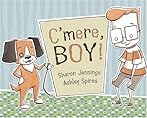
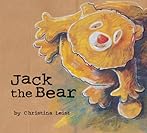
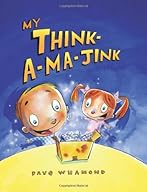
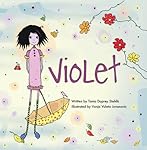
Visit check out the Forest of Reading website to find out what books written by Canadian Authors are recieving nominations. 

The Forest of Reading is a huge annual event that encourages children of all ages to read books by Canadian authors and vote for their favourites!

Some of the Nominees Include:

Books for the Primary Grades

    That is just a sampling of the nominated books.  Check out Forest of Reading to find out what other great books are available by Canadian authors.
    

Monday, May 23, 2011

Factors Necessary for Reading Readiness

Reading is a very complex skill, and one that can begin years before children enter school.  Research has identified six factors that need to be in place to greatly improve a child's readiness to learn to read.  They include:

  • Vocabulary.  Knowledge of the names of things and concepts.
  • Print Motivation.  Refers to the interest and enjoyment a child has with books.
  • Narrative Skills.  The ability to describe things and events and to tell stories or convey ideas.
  • Phonological Awareness.  The ability to hear and play with the smaller sounds in words.
  • Print Awareness.  Refers to how aware a child is of print, knowledge of how to handle a book, and how to follow the written word on a page.
  • Letter Knowledge.  Refers to learning the sounds and names of letters, and the ability to recognize them in their environment.
I am preparing articles on activities parents, care-givers and teachers can do with babies and children to ensure that children have ample positive reading experiences that work on all of the factors listed above.